
Key Takeaways
- Maintaining individual APIs for WhatsApp, SMS, and Email creates massive technical debt.
- Engineering teams spend 30-40% of their time on maintenance rather than product innovation.
- Unified messaging layers remove the need for platform-specific SDK management.
- Strategic architectural choices can help you prevent technical debt before it starts.
- Abstraction layers are the only way to achieve true multi-channel scale without explosive costs.
For the past decade, the standard way to build communication-heavy applications involved a "collect them all" approach to third-party APIs. If you wanted to send a WhatsApp notification, you built for Meta's Graph API. If you wanted to send an SMS, you reached for Twilio. For email, it was SendGrid or Postmark.
This approach worked when startups were focused on single channels. Today, it is an architectural liability that is nearing its inevitable obsolescence.
Why Is Platform-Specific Maintenance Becoming Obsolete?
The core issue is that platform-specific API maintenance is no longer a sustainable business model for engineering teams. Every time a provider updates their webhook structure or changes their authentication flow, your entire pipeline goes offline.
Consider the overhead involved in maintaining direct integrations:
- Versioning hell: Keeping track of deprecated endpoints across four or five different providers.
- Infrastructure fragmentation: Managing unique session pools for WhatsApp, distinct rate-limiting strategies for SMS, and entirely different queueing logic for emails.
- Opportunity cost: Your senior developers are essentially becoming unpaid maintainers for third-party SDKs.
Engineering teams that spend 40% of their sprint cycles fixing API breaks are effectively paying a 'fragmentation tax' that prevents them from shipping core features.
We see this often in why your startup should avoid enterprise messaging platforms, as the lock-in often creates a "black box" effect where you lose control over your own message delivery architecture.
How Will Unified APIs Replace Fragmented Stacks?
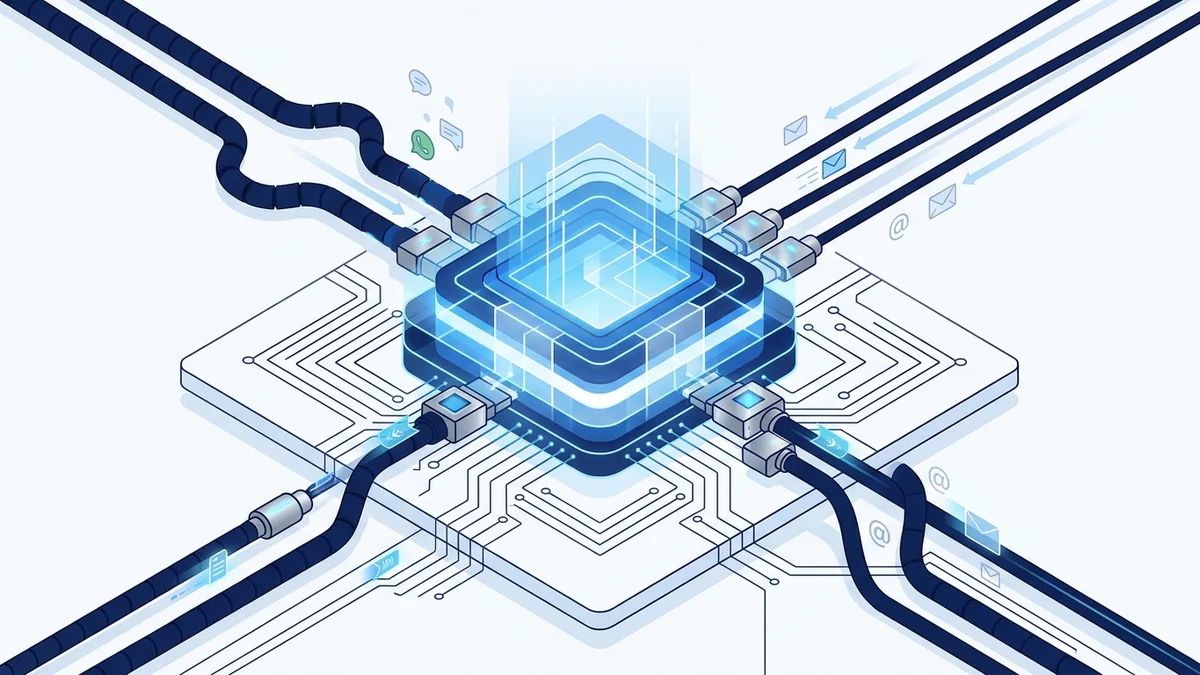
The industry is shifting toward a "Unified Messaging Layer" philosophy. Instead of interacting with individual providers, developers will interact with a single, agnostic API that abstracts the underlying platform complexity.
The benefits of this shift are quantifiable:
- Normalized Webhooks: Receiving delivery receipts in a standard JSON format regardless of whether the message traveled over SMS or WhatsApp.
- Automated Failover: Your application logic shouldn't care if WhatsApp is down; it should automatically route through SMS if the delivery fails.
- Centralized Auth: One set of credentials to manage, significantly reducing the surface area for security vulnerabilities.
This is precisely where tools like Conduit excel by providing a single API to manage complex messaging lifecycles, ensuring your team isn't bogged down by the nuances of individual channel SDKs.
What Does This Mean for Your Engineering Roadmap?
As the need for specialized API maintenance dies, the focus of engineering leadership will shift toward integration and orchestration. The goal is to move faster, which is often hindered by legacy choices and cloud cost optimization oversights.
When you stop building per-channel silos, you gain three major operational advantages:
- Portability: You can switch from one SMS provider to another in minutes, not months, because your application logic is decoupled from the provider.
- Reduced Latency: Unified systems often leverage global edge computing to manage socket connections, keeping session overhead out of your main application thread.
- Improved Reliability: Standardizing on a single, robust infrastructure layer ensures that rate limits are managed consistently across all touchpoints.
How Should You Architect for Future Resilience?
The death of platform-specific maintenance doesn't mean the death of these channels. It means the death of managing them manually. You need to treat your messaging layer as infrastructure, not as a collection of external dependencies.
Follow these principles for a future-proof architecture:
- Abstraction-First Development: Never let provider-specific logic touch your business domain code.
- Payload Neutrality: Ensure your message objects are generic, with the channel-specific transformations handled by a dedicated service or middleware.
- Eventual Consistency: Design your application to handle non-blocking, asynchronous events, which is critical for high-volume message queuing systems.
By shifting to an abstraction-first model, you effectively future-proof your product against the constant volatility of third-party platform updates. This allows your team to remain product-led, focusing on the user experience rather than chasing endpoint changes.
Stop stalling your product roadmap with technical bottlenecks and let Renbo Studios accelerate your development with high-availability systems and expert-level integration. Our team understands the nuances of modern architecture and can help you build the robust messaging infrastructure your application deserves.
Visit renbostudios.com today to scale your platform faster with our dedicated engineering lab. Whether you need to overhaul your current messaging flow or build a new, scalable architecture from the ground up, we are here to ensure your technical strategy aligns perfectly with your growth goals.



Comments