
Key Takeaways
- Implement a primary and secondary delivery logic to ensure critical alerts reach users regardless of network outages.
- Avoid the pitfalls of manual integration by adopting a unified API approach to handle session management.
- Latency in third-party APIs is the leading cause of communication failure in high-volume apps.
- Stateless delivery queues allow for automatic retries and channel switching without manual intervention.
- Building a multi-channel fallback system requires careful handling of rate limits and proxy rotation.
In the modern engineering landscape, communication isn't just a feature—it is the lifeblood of your product. Whether you are sending a time-sensitive OTP or a critical security alert, a failed message is a failed user experience.
As we discussed in our recent analysis on 2025 messaging trends, the industry is shifting toward unified infrastructure. Relying on a single provider for your messaging needs is a single point of failure that your architecture cannot afford.
Why Do Traditional Messaging Systems Fail?
Most engineering teams treat messaging as a secondary service, failing to account for the volatile nature of external APIs. When a provider like WhatsApp or Twilio experiences downtime, your entire notification stream halts.
- API Downtime: Third-party services frequently suffer from regional outages or scheduled maintenance windows.
- Rate Limiting: Aggressive outbound messaging can trigger automated rate limits, blocking your API keys instantly.
- Network Instability: SMS delivery is highly dependent on carrier-grade routing, which is notoriously inconsistent in emerging markets.
- Session Fragility: Maintaining active sessions for platforms like WhatsApp requires persistent socket management that is prone to leaks.
These issues contribute significantly to the hidden costs of managing multi-channel messaging sessions, often ballooning engineering hours spent on maintenance rather than features.
How Do You Architect a Resilient Multi-Channel Fallback Strategy?
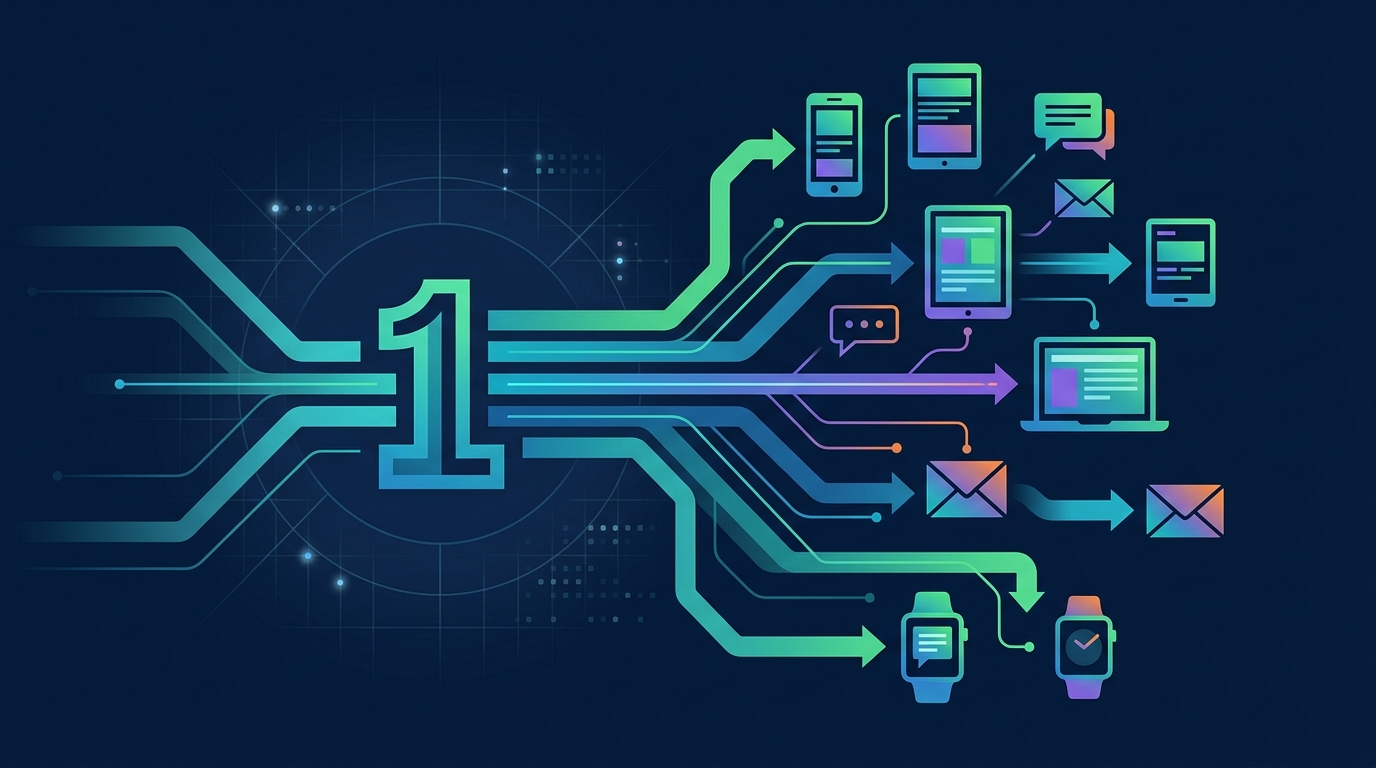
Building a robust system starts with decoupling your business logic from the delivery channel. You need an abstraction layer that treats every message as a job in a queue, not a direct API call.
- Define a Priority Queue: Always attempt delivery on the lowest-cost, highest-engagement channel first (e.g., WhatsApp).
- Implement a Timeout threshold: If the primary channel doesn't return a delivery receipt within a set window (e.g., 30 seconds), trigger the fallback.
- Use a Secondary Channel: Route the same message payload via SMS or Email if the primary fails.
- Monitor Deliverability: Log all events in a centralized data store to identify which channels are underperforming in specific regions.
A robust fallback system reduces user support tickets by an average of 40% during periods of platform instability.
How Can You Optimize Your Infrastructure for Multi-Channel Fallback?
Technical debt often manifests as a tangled web of individual SDKs and hardcoded logic for every provider. To scale effectively, you must standardize your communication stack to ensure that adding a new channel doesn't require a full codebase rewrite.
- Standardized Payloads: Ensure your application sends a uniform JSON structure that your middleware translates into channel-specific requirements.
- Automatic Proxy Rotation: Use rotating proxies to distribute requests, preventing your static IPs from being flagged by platforms like Instagram or WhatsApp.
- Webhooks Aggregation: Centralize status callbacks (delivered, read, failed) from all providers into one endpoint to simplify your feedback loop.
- State Management: Keep a record of the user's preferred communication method to avoid redundant fallback attempts.
As explored in Scaling Architecture: 5 Patterns to Prevent Technical Debt, clean abstraction layers are essential for maintaining sanity as your platform grows.
Is Your Messaging Layer Ready for Production Scale?
Complexity is the enemy of reliability. When you manage separate configurations for WhatsApp, SMS, and Email, you are building a fragmented stack that is inherently brittle. The goal is to offload the burden of session management, rate limiting, and proxy rotation to a dedicated service layer.
By unifying your messaging infrastructure, you transform your backend into a channel-agnostic machine. This allows your team to trigger messages programmatically without worrying about whether the underlying socket for a specific platform is currently active or blocked.
Stop stalling your product roadmap with technical bottlenecks and let Renbo Studios accelerate your development with high-availability systems and expert-level integration. Visit renbostudios.com today to scale your platform faster with our dedicated engineering lab.


Comments