
The Evolution of Digital Experiences in 2026
As we navigate through 2026, the digital product landscape has shifted from purely functional interfaces to hyper-personalized, emotionally intelligent experiences. The mastery of UX design trends is no longer just a competitive advantage; it is a prerequisite for survival in an AI-saturated market. Users today expect seamless, intuitive, and anticipatory interactions that feel less like software and more like an extension of their intent.
In this article, we explore the seven most significant shifts defining the current era of design, providing insights into how product teams can leverage these developments to foster loyalty and improve conversion rates.
1. Generative UI: Real-Time Interface Adaptation
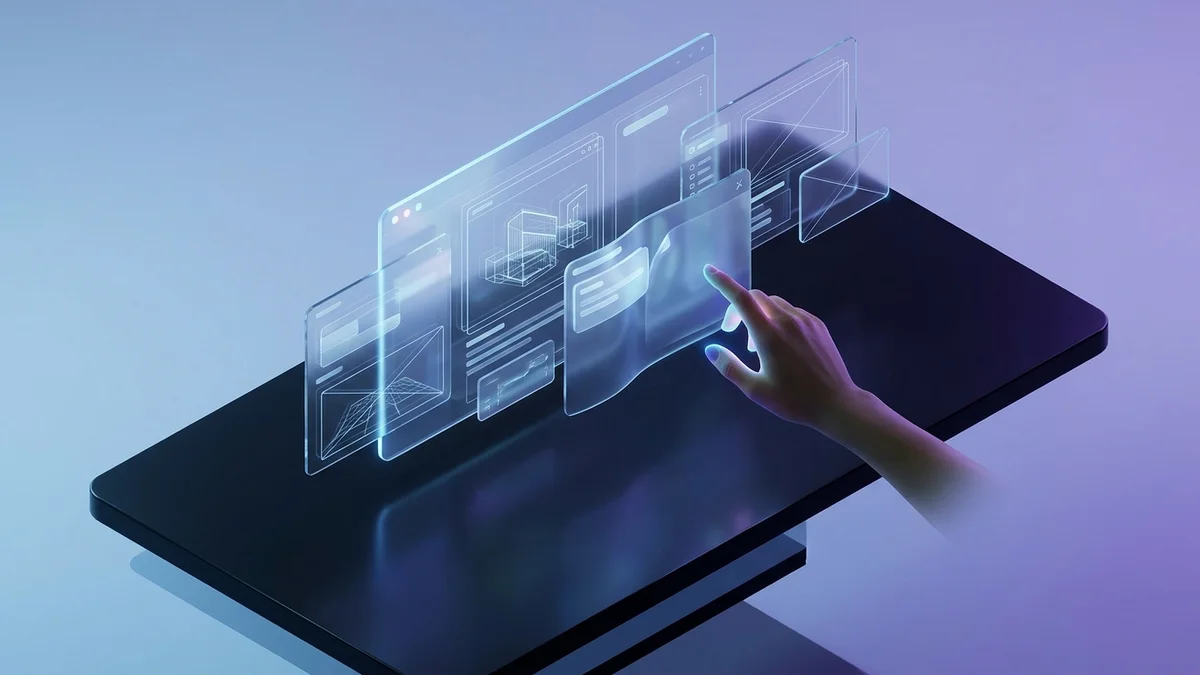
The days of static, one-size-fits-all layouts are ending. Generative UI is perhaps the most impactful of all UX design trends this year. Instead of serving the same dashboard to every user, modern digital products now utilize AI to construct interfaces in real-time based on the user's specific context, task history, and accessibility needs.
- Contextual Awareness: Interfaces strip away unused features to minimize cognitive load.
- Personalized Workflows: Elements shift position based on individual usage patterns.
- Adaptive Content: Text and visual cues adjust to match the user's literacy level or technical familiarity.
2. Affective Computing and Emotional Design
Design is moving beyond usability into the realm of 'affective computing.' By integrating sentiment analysis and nuanced behavioral tracking, products can now detect user frustration or delight. UX design trends in 2026 emphasize interfaces that 'breathe'—subtly shifting micro-interactions to provide empathy during high-friction tasks like troubleshooting or checkout processes.
3. The Rise of Spatial Computing and Mixed Reality Interfaces
With the maturation of spatial computing hardware, UX designers are moving off the 2D plane. Designing for XR (Extended Reality) requires a complete rethinking of depth, focus, and haptic feedback. This trend is not limited to gaming; enterprise software and educational tools are adopting 3D interaction models that allow users to manipulate complex data sets in physical space, setting a new standard for immersive UX design trends.
4. Radical Minimalism and 'Invisible' UX
Complexity has become the enemy of retention. In 2026, the most successful products are those that achieve 'invisible' UX. This involves removing all unnecessary UI chrome—borders, excessive icons, and intrusive navigation menus—in favor of natural language processing (NLP) and voice-first inputs. The goal is to provide a frictionless bridge between the user's thought and the system's execution.
5. Eco-Conscious Digital Design
Sustainability is no longer a corporate buzzword; it is a design metric. 'Carbon-efficient design' is one of the most vital UX design trends as users become increasingly aware of the environmental footprint of data centers. Designers are optimizing asset sizes, reducing unnecessary background processing, and implementing 'dark mode by default' to extend battery life and reduce energy consumption. This conscious design approach builds deep trust with an environmentally aware user base.
6. Accessibility as a Foundation, Not an Afterthought
In 2026, accessibility is not a checklist item—it is the baseline for innovation. Advanced screen readers, haptic-based navigation for the visually impaired, and AI-driven real-time translation features are standard. By prioritizing inclusive design, companies are not only fulfilling moral obligations but also capturing untapped market segments. Effective UX design trends now prove that designing for edge cases often results in a better overall experience for every user.
7. Hyper-Personalized Micro-Animations
Micro-animations have evolved from mere decoration to essential communicative tools. In 2026, these animations are triggered by high-precision sensors, providing visceral feedback that makes the software feel alive. Whether it is a subtle glow that indicates a successful sync or a reactive 'elastic' feel to a scroll gesture, these nuanced interactions are what distinguish a good product from an exceptional one.
Conclusion: Staying Ahead of the Curve
The trajectory of digital product design is clearly pointing toward a future that is more empathetic, sustainable, and adaptive. By integrating these UX design trends into your development lifecycle, you ensure your product remains relevant in an increasingly crowded ecosystem. Remember, the core of great design remains the same as it has always been: solving human problems with elegant, thoughtful solutions. As we look toward the remainder of 2026 and beyond, the teams that successfully balance cutting-edge AI integration with human-centric empathy will undoubtedly lead the market.
Comments